UK regulators grant approval for groundbreaking CRISPR gene editing medical treatment
UK regulators approve medical treatment involving CRISPR gene editing, marking a groundbreaking milestone as the first country to grant regulatory approval for this revolutionary tool
Get the latest science news, fascinating discoveries, and scientific advancements by subscribing to CNNs Wonder Theory science newsletter. The United Kingdom has made history by granting regulatory approval to a groundbreaking medical treatment using the innovative CRISPR gene editing tool.
The Medicines and Healthcare products Regulatory Agency of the country announced on Thursday that it has approved a treatment called Casgevy for sickle cell disease and beta thalassemia. These genetic conditions are caused by gene errors in hemoglobin, which is responsible for carrying oxygen in red blood cells throughout the body. Currently, there is no universally successful treatment available for either disorder. Sickle cell disease, often leading to painful attacks, is more prevalent among individuals with an African or Caribbean family background. On the other hand, beta thalassemia primarily affects individuals of Mediterranean, South Asian, Southeast Asian, and Middle Eastern descent, according to the statement.

On March 7, 2023, Kevin Wake receives a transfusion for sickle cell disease at the Sickle Cell Center at University Health. During the procedure, a worker from the Community Blood Center is seen hanging a bag of blood. (Tammy Ljungblad/The Kansas City Star/Tribune News Service via Getty Images)
Tammy Ljungblad/The Kansas City Star/Tribune News Service via Getty Images
FDA considers first CRISPR gene editing treatment that may cure sickle cell
Julian Beach, the interim executive director of healthcare quality and access at the MHRA, stated that both sickle cell disease and β-thalassemia are debilitating conditions that can be life-threatening. Previously, bone marrow transplants were the only long-term treatment option, but this procedure came with the risks of rejection due to the need for a closely matched donor. However, there is now exciting news as an innovative and groundbreaking gene-editing treatment called Casgevy has been authorized. In clinical trials, Casgevy has shown promising results in restoring healthy haemoglobin production in the majority of participants with sickle-cell disease and transfusion-dependent β-thalassaemia, providing relief from the symptoms of these diseases.
The CRISPR-Cas9 gene editing technique offers a remarkable potential for scientists to make highly accurate modifications to DNA. Recognized for its groundbreaking contribution, Emmanuelle Charpentier and Jennifer A. Doudna were awarded the Nobel Prize in Chemistry in 2020.
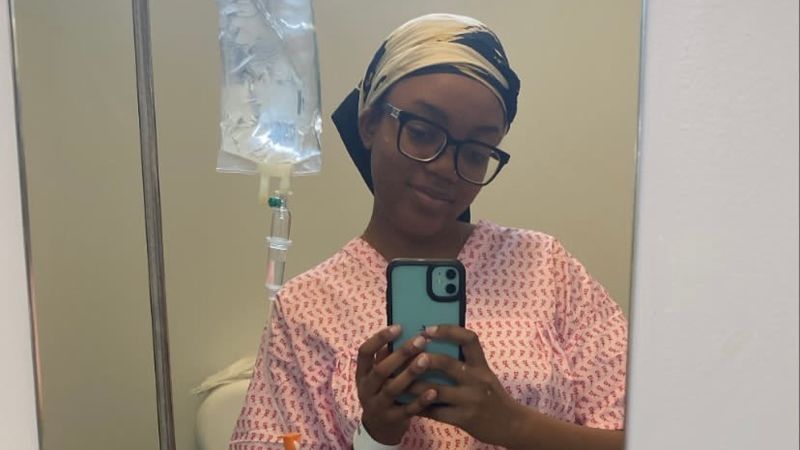
Sharon anticipating her return home after her third day in the hospital due to an emergency sickle cell crisis.
Courtesy of Sharon Browne-Peter
Why we need more Black blood donors to treat sickle cell anemia
Casgevy is not simply a pill or injection. The treatment, developed by Vertex Pharmaceuticals, involves extracting stem cells from a patient's bone marrow and genetically modifying a specific gene in a laboratory setting. Following this, patients must undergo a "conditioning treatment," which may include the use of an immunosuppressing drug, radiotherapy, or chemotherapy, to prepare the bone marrow. The modified cells are then reintroduced into the patient's body. The Medicines and Healthcare products Regulatory Agency (MHRA) provides this information. Subsequently, patients may be required to spend at least one month in a hospital facility while the treated cells establish themselves in the bone marrow and initiate the production of red blood cells featuring a stable form of haemoglobin, as stated.
The US Food and Drug Administration is currently assessing the same treatment and is projected to issue a verdict on its approval by December 8. According to Alena Pance, a senior lecturer in genetics at the University of Hertfordshire, this development represents a significant stride forward in the field of medical interventions for genetic diseases that were previously deemed incurable. This statement was released by the Science Media Centre, an organization that offers information to journalists.

On May 22, 2018, in Berlin, Germany, a researcher is carefully observing a CRISPR/Cas9 process through a stereomicroscope at the Max-Delbrueck-Centre for Molecular Medicine. The photo, taken by Gregor Fischer for dpa (Photo by Gregor Fischer/picture alliance via Getty Images), captures the moment when the researcher handles a petri dish.
Gregor Fischer/picture alliance/Getty Images
How human gene editing is moving on after the CRISPR baby scandal
"By modifying the patient's bone marrow stem cells, the complications related to immune compatibility are circumvented, eliminating the need for donor matching and immunosuppression. This approach offers a genuine cure for the disease, rather than just a treatment," explained Pance.
While the MHRA's announcement did not disclose the treatment cost, it is expected to be quite expensive.
The CRISPR-Cas9 technology has significantly revolutionized the fields of biomedical research, clinical medicine, and agriculture, gaining extensive usage in laboratories worldwide.
However, controversy surrounded this innovative mechanism when Chinese scientist He Jiankui declared in 2018 that he had successfully engineered the world's premier gene-edited infants. Experts emphasize that exploiting this potent methodology to manipulate human genes, which could be inherited by future generations, is highly discouraged.